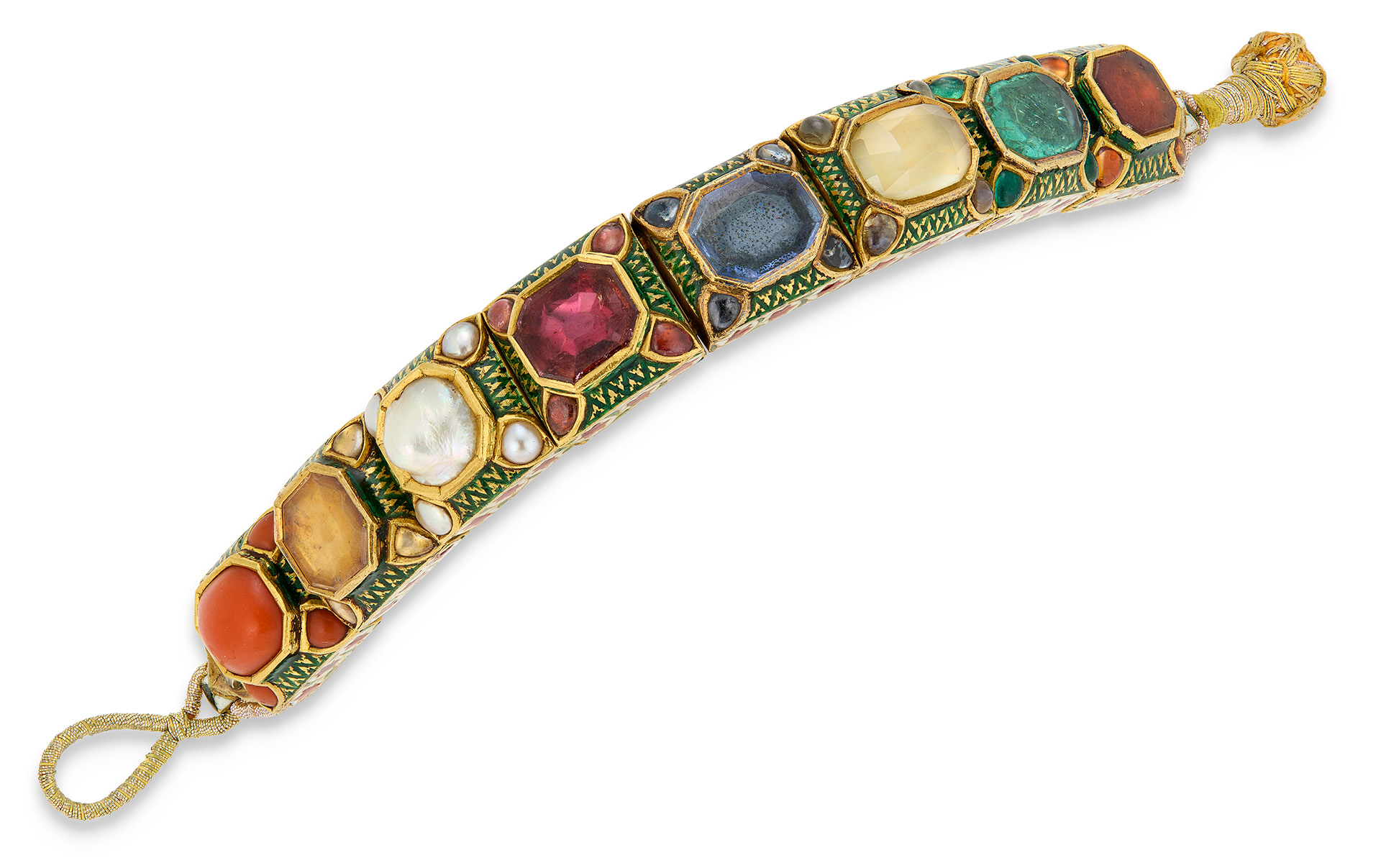
Navaratna Bazuband
India (Jaipur), circa 1850
Length: 15.2 cm
Width: 1.2 cm
Weight: 62.5 grams
A gold and enamelled gem-set bracelet, comprising of eight square panels set to the front with a singular large gem mounted in a gold octagonal collet. The reverse is finely decorated in enamel depicting bold floral and leaf designs. Each of the large gems are flanked to the four corners with the same gems in a small tear-shaped gold collet. The eight foiled stones comprise coral, topaz, pearl, hyacinth, blue sapphire, cat’s eye, emerald and garnet.
The great gemstones (maharatnani) are pearl, blue sapphire and emerald. The lesser gemstones (uparatnani) are topaz, cat’s eye, coral and hyacinth. All the stones are of equal size and are each mounted in an octagonal gold collet. To each corner of the square panels are set four smaller cabochon gemstones in gold florets.
Combined in a traditional manner in a single ornament, the arrangement of gemstones seen here is called the navaratna. Each stone is associated with a Hindu deity, with the arrangement being symbolic. In this form they become, what is universally believed in India to constitute a powerful amulet that polarises all space in relation to the Sun, the giver of life, and man in relation to the Universe. In doing so, the navaratna jewels become a manifestation of the Divine plane for every living creature.(1) Tradition dictates that they should all be of the same size, so as equal importance is given to each deity, although sometimes the ruby (symbolising the sun) is the largest.(2) The stones also have to be flawless, as only then do they have auspicious powers, which can protect one from all manner of danger. Flawed stones have the opposite effect.
References:
1. Oppi Untracht, Traditional Jewelry of India, 1997, p. 304.
2. Ibid.