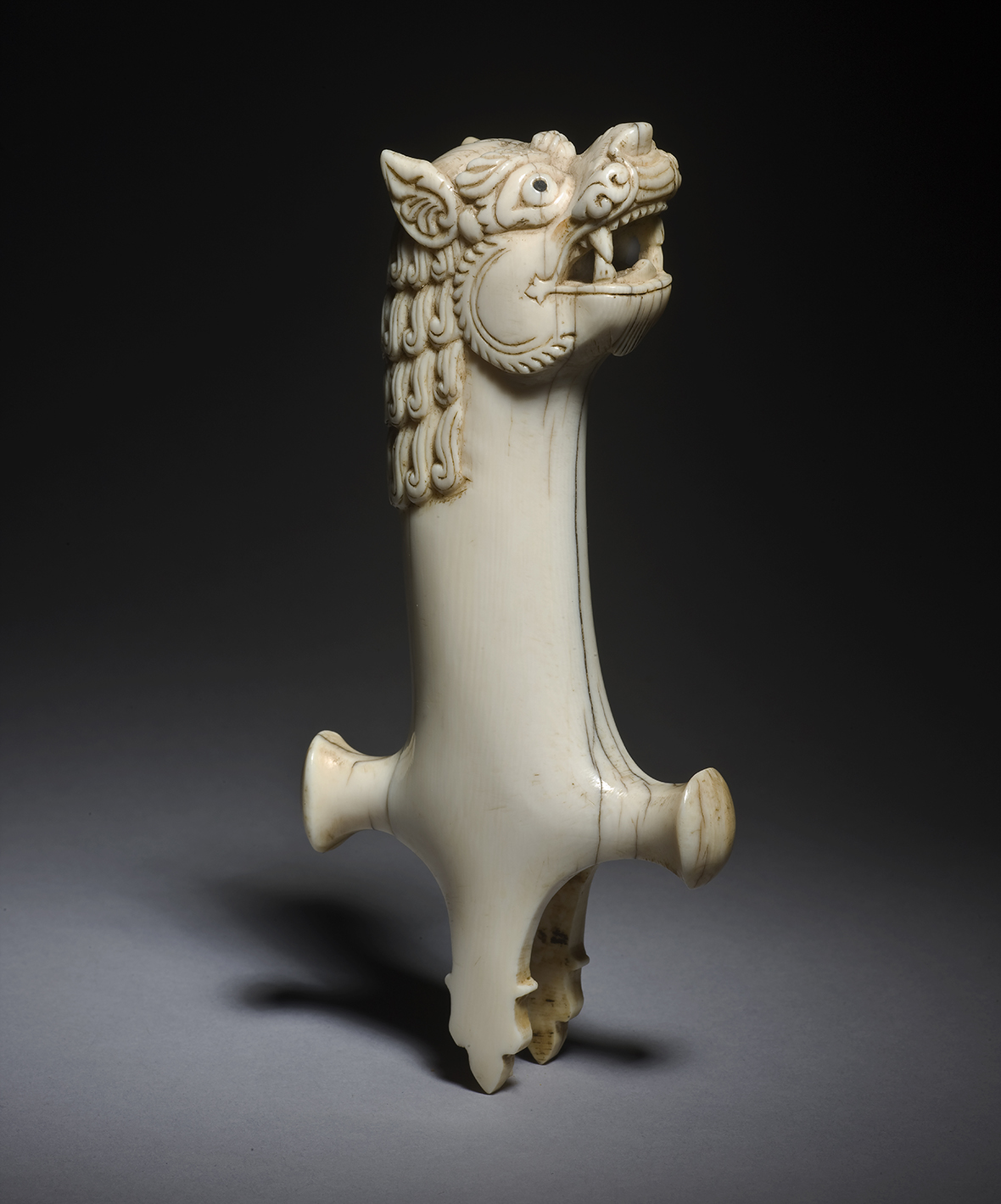
Ivory Talwar Hilt
Sri Lankar, 18th century
Length: 15 cm
Width: 7.5 cm
Depth: 2.4 cm
A carved ivory talwar (sword) hilt in the form of the head and neck of a mythological lion (yali or sinha mukha). The ferocious beast with bulging eyes separated by a crest to the forehead, erect pointed ears, an open gaping mouth with protruding, curling tongue, a row of fearsome teeth to the upper jaw and powerful dragon-like fangs. The mane of the yali’s neck is dressed with elegant, stylised braids of hair. The grip, oval quillons and cusped base of the hilt are undecorated to provide a smooth contrast with the exuberance of the pommel of yali form.
A yali is a leogrpyh, a fantastic composite rearing lion or tiger with aspects of the dragon or gryphon. It is also called a yalaka, meaning a horned, hybrid lion. The term sinha mukha means literally lion’s head or face.
The yali falls into the class of creature generally termed vyala (the adjective meaning wicked or vicious) or shardula, which has can be interpreted as both lion and lioness, or tiger. In Indian architectural temple sculpture, these fabulous beasts are often depicted dwarfing the figures of men who oppose them in combat, or shown riding the yali as an expression of man’s struggle over the elemental forces of nature which the beat represents. The yali also represents the uncontrolled passions and appetites rampant in every man that must be mastered, and is associated with Vishnu and the goddess Kali.
Sword hilts carved from ivory are rare as most ivory hilts are for daggers. A related Sri Lankan ivory sword hilt with a lion head pommel and an elaborate mane decorated with flowers is illustrated in Robert Hales, Islamic and Oriental Arms and Armour: A Lifetime’s Passion, 2013, p. 58, no. 119.